

Project Objective
Architectural complex of a low-density tourist resort, located on a plot of approximately 9,600 m² in the town of Inhambane (Mozambique), designed under criteria of landscape integration, sustainability, climatic comfort, and high-value tourist experience.
The resort consists of independent cabins intended for tourist accommodation and a central building for common use that houses the dining and social areas.
Location and Environment
The scope of intervention is situated in a natural coastal environment characterized by:
• Tropical landscape of native vegetation.
• Direct proximity to the sea.
• Gentle topography and sandy soils.
• Warm climate with high solar radiation and constant sea breezes.
The design of the complex responds to these conditions, prioritizing orientation, natural cross ventilation, and passive solar protection.
Architectural Concept
The resort is conceived as an exclusive eco-resort, featuring single-story, dispersed buildings connected by organic pathways, avoiding overcrowding and promoting privacy.
The guiding principles of the project are:
• Reinterpreted vernacular architecture.
• Use of natural and local materials.
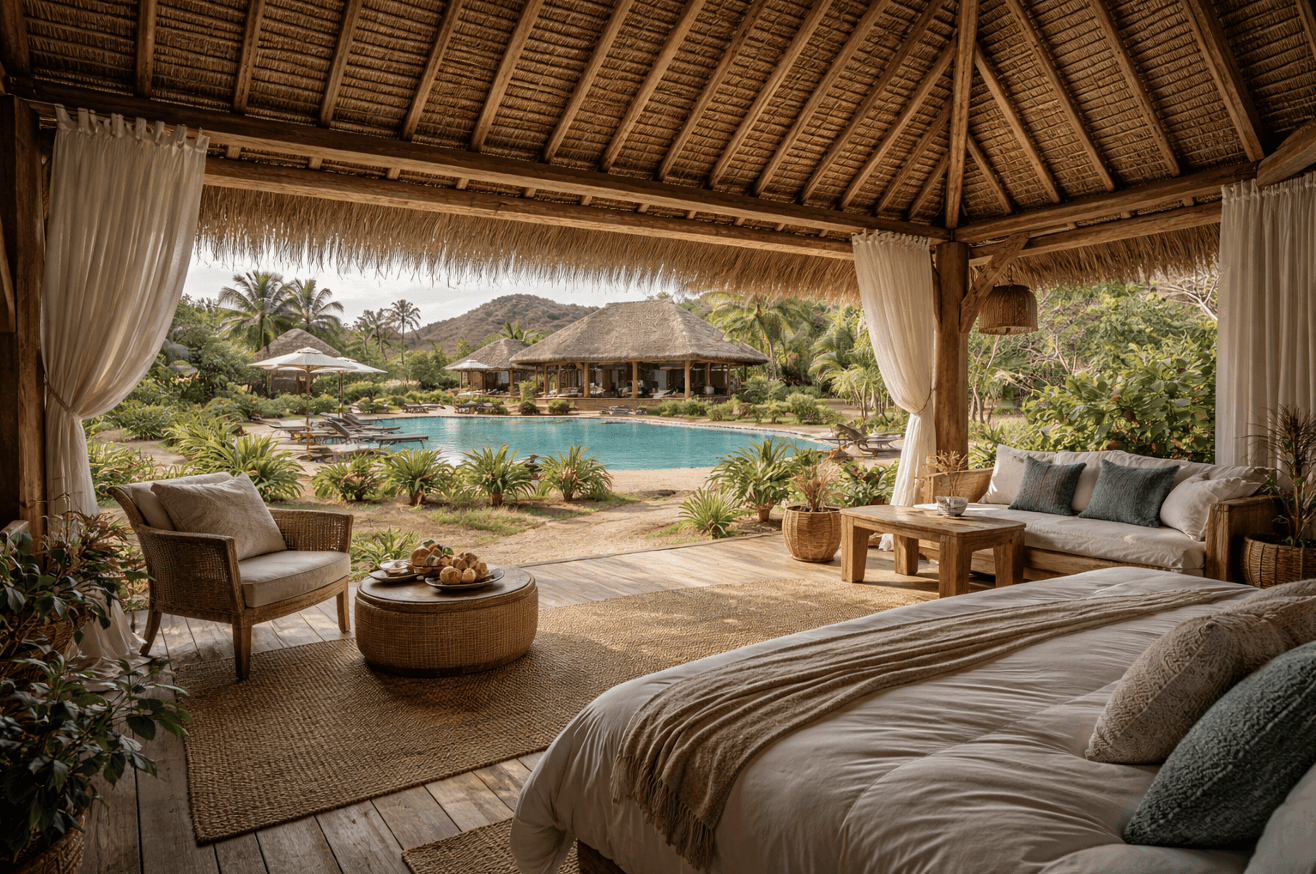
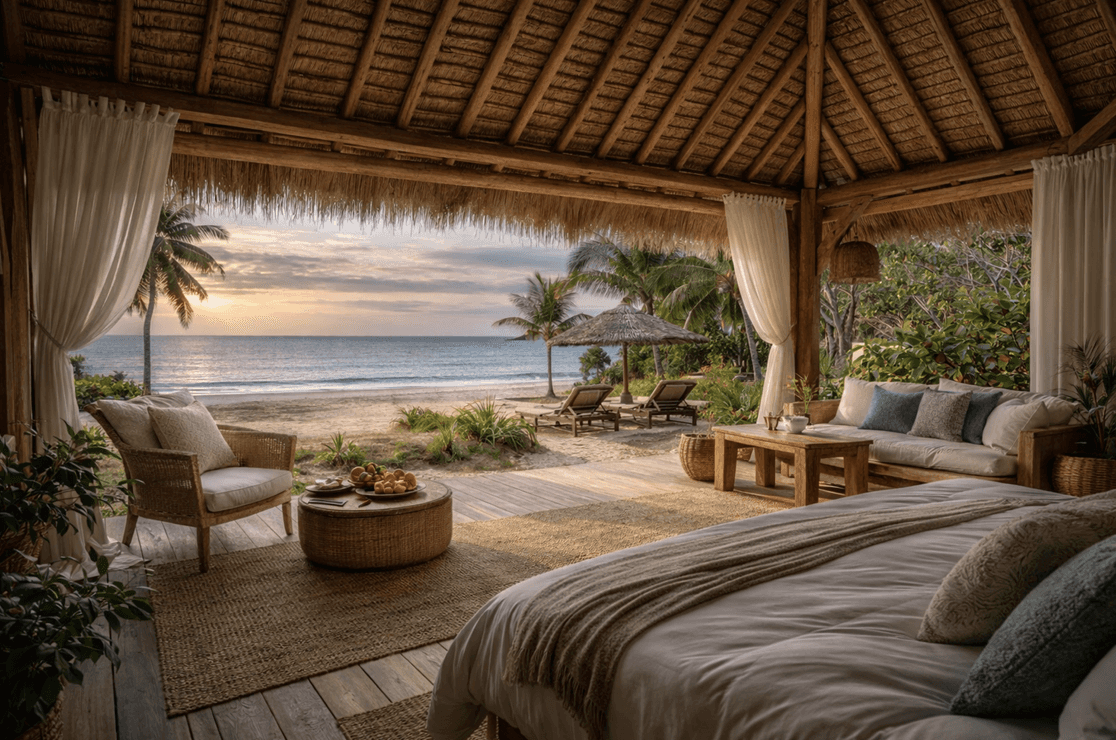
• Direct indoor-outdoor relationship.
• Human scale and minimal disruption of the surroundings.
General Master Plan
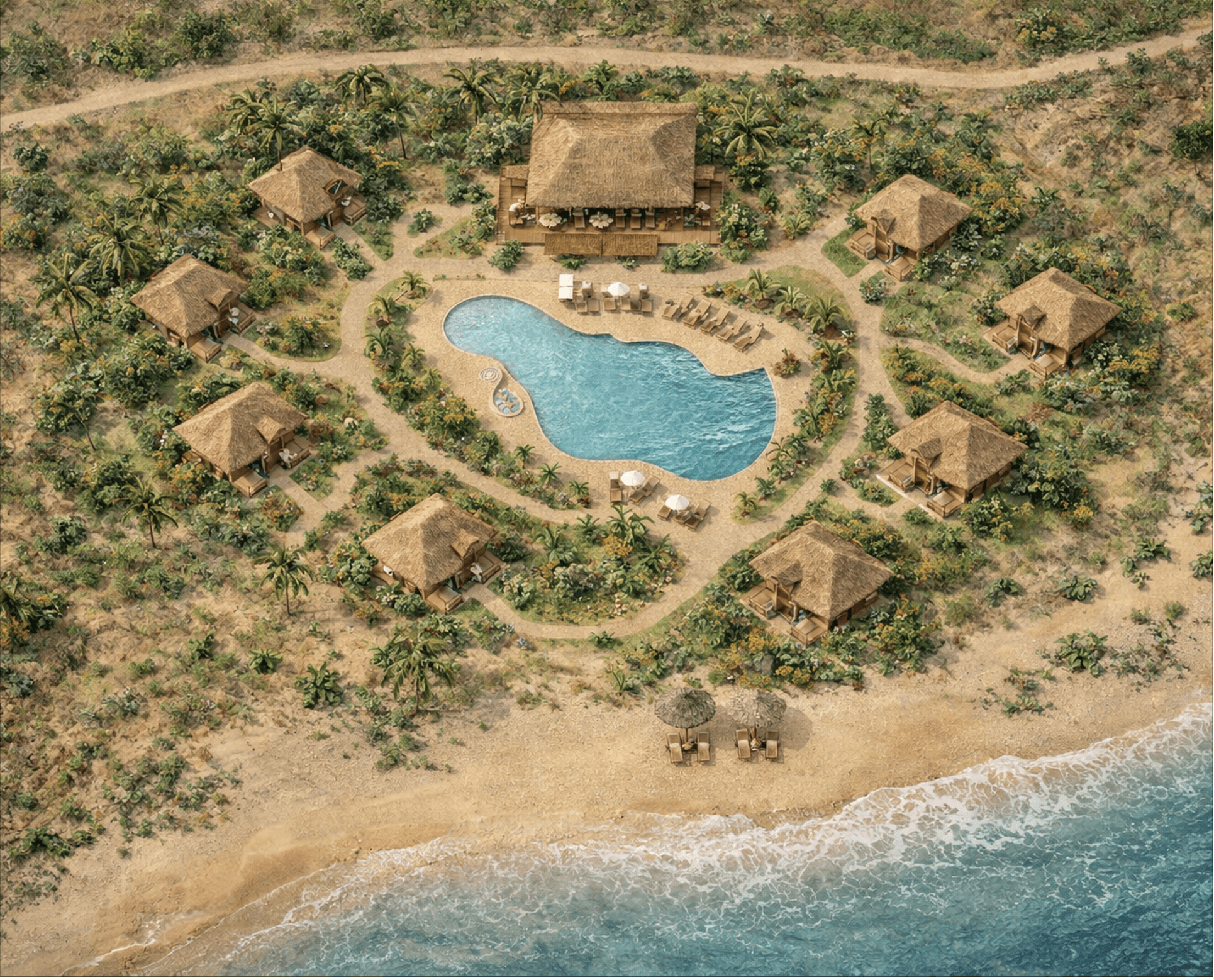
The layout is organized around a central axis of community use, comprising:
• Organically shaped swimming pool.
• Solarium area.
• Main restaurant building.
Surrounding this core, the accommodation cabins are distributed, arranged in a semicircle and facing the sea, maintaining sufficient distance between them to ensure views, ventilation, and privacy.
Internal circulation is provided by pedestrian pathways of compacted sand, integrated into the landscape.
Functional Program
Accommodation Cabins
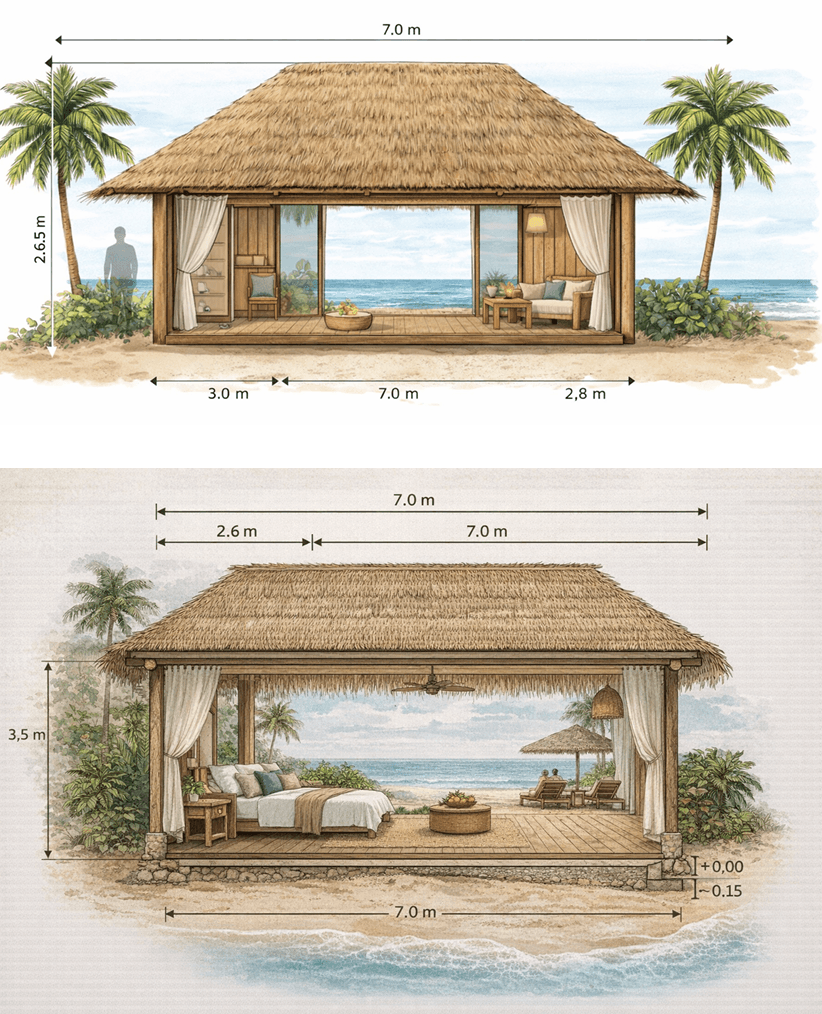
Each cabin is designed for up to four occupants and has an approximate built area of 55–60 m², including a terrace. Its functional program is as follows:
• Master bedroom space.
• Integrated living area.
• Full bathroom.
• Built-in storage.
• Covered outdoor terrace with sea views.
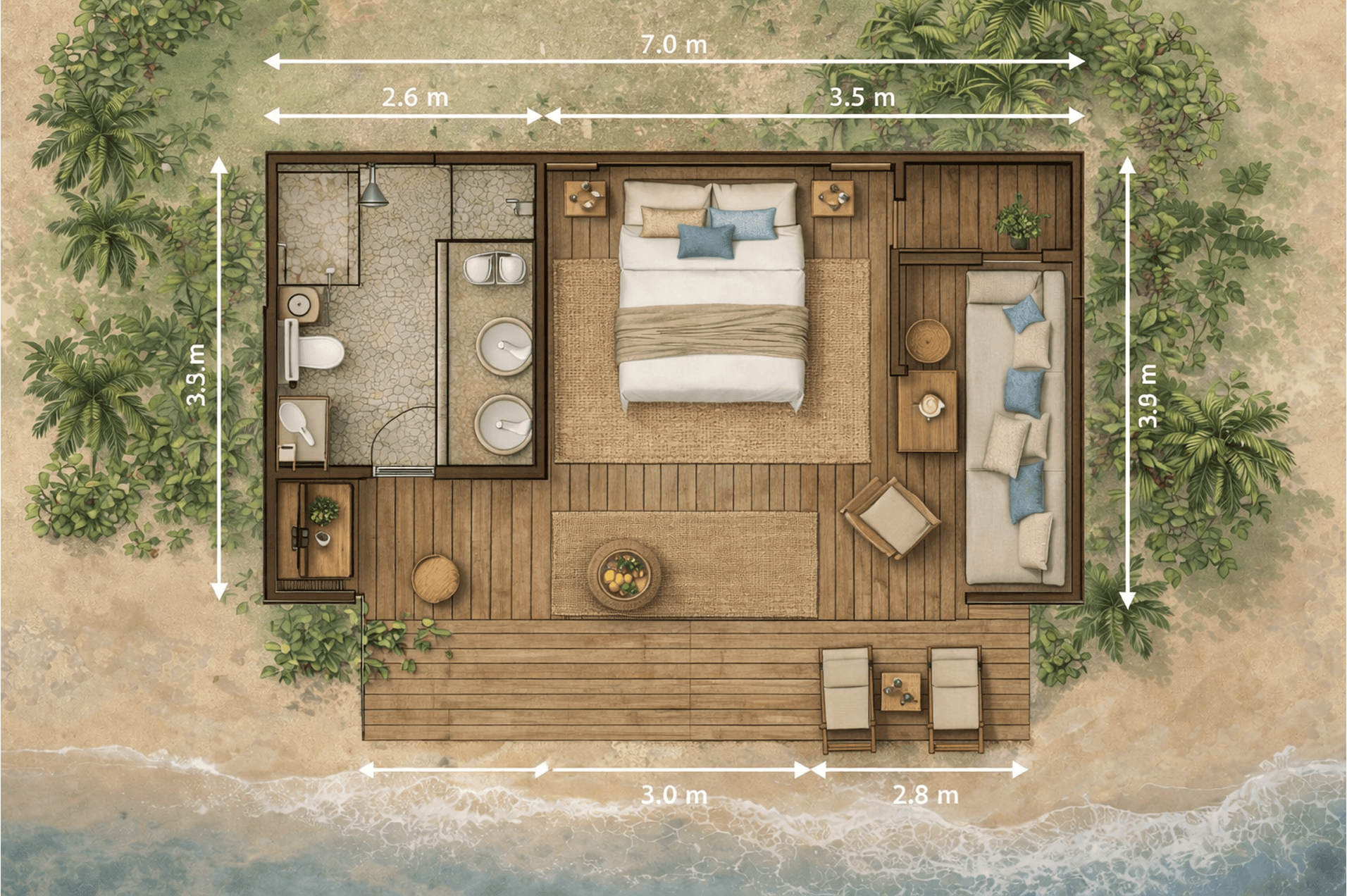
The cabins feature an open-plan layout, favoring flexibility of use and a visual relationship with the natural surroundings.
Common Areas
The common-use building houses:
• Open restaurant with panoramic views.
• Bar area.
• Kitchen and service areas.
• Covered outdoor terraces.
• Central swimming pool as the backbone element of the complex.
Constructive Solution
Structural System
• Shallow foundation adapted to sandy soil.
• Load-bearing treated wood structure.
• Elevated platform above the natural ground level for moisture protection.
Enclosures and Roofs
• Lightweight wood enclosures and natural panels.
• Sloped thatch roof with a large overhang for sun and rain protection.
• Partially open spaces with textile or sliding enclosures.
Materials and Finishes
Priority is given to the use of low environmental impact materials:
• Natural wood.
• Vegetable fibers.
• Local stone in bases.
• Natural textiles in neutral tones.
• Wood and compacted sand floorings.
The color palette is inspired by the environment: sands, ochres, greens, and soft blues.
Bioclimatic Strategies and Sustainability
The project incorporates passive sustainability criteria:
• Natural cross ventilation.
• Solar protection via deep roof overhangs.
• Predominantly natural lighting.
• Integration of native vegetation.
• Reduction of energy consumption.
The complex is designed to minimize its environmental footprint and maximize thermal comfort without relying on intensive mechanical systems.
Image and User Experience
The resort offers an experience based on:
• Direct contact with nature.
• Privacy and tranquility.
• Warm and sensory architecture.
• Visual continuity between safety interiors and the marine landscape.
Each cabin is perceived as an individual sanctuary, while the common areas foster togetherness and social life within the resort.